
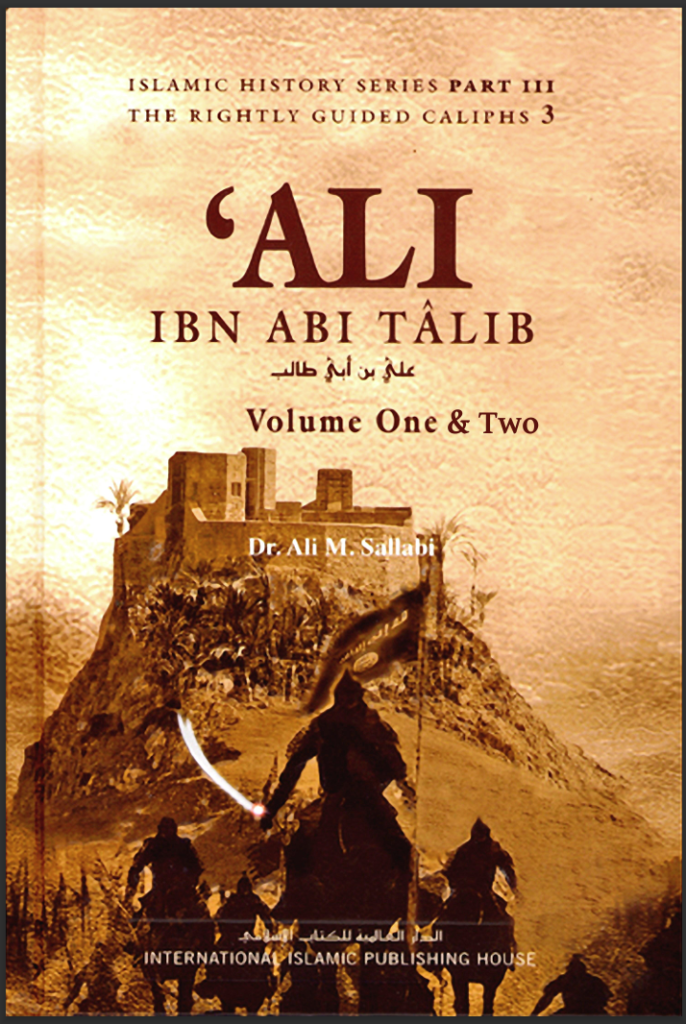
Ali ibn Abi Talib — Volumes One & Two, written by Dr. Ali M. Sallabi and translated by Nasiruddin al-Khattab, is an extensive historical and biographical study of one of the most influential personalities of early Islam. The work follows Hazrat Ali ibn Abi Talib from his birth, family background and early years in Makkah through his acceptance of Islam, migration to Madinah, close companionship with Prophet Mohammad صَلَّى اللّٰهُ عَلَيْهِ وَآلِهِ وَسَلَّم, marriage to Hazrat Fatimah, and his important role in the formative events of the Muslim community.
Beyond recounting historical events, the book examines Hazrat Ali’s intellectual and spiritual character. It discusses his relationship with the Qur\’an, his understanding of Islamic teachings, his knowledge and jurisprudence, devotion, courage, humility, generosity and wisdom. It also studies his relationship with the earlier Rightly Guided Caliphs and then provides a detailed account of his own caliphate, including his principles of government, consultation, justice, equality, public administration, financial affairs, judiciary and appointment of governors.
A major part of the second volume is devoted to the political upheavals of Hazrat Ali’s caliphate, including the Battle of the Camel, the Battle of Siffeen, the arbitration controversy, the emergence of the Kharijites and the circumstances leading to his martyrdom. The author examines differing historical reports and attempts to distinguish between accounts that he considers reliable and those he regards as weak or fabricated.
The work is therefore both a biography and a study of leadership, faith, law, government and political conflict in the earliest period of Islamic history. It should also be understood that the author explicitly approaches disputed historical and theological questions from a Sunni, Ahl al-Sunnah wa\’l-Jama\’ah perspective, particularly when discussing the conflicts among the Companions and later Sunni-Shia disagreements.